
From 50 Clicks to 50 Seconds: Automating Optical Networks Beyond Traditional Tools
This presentation demonstrates that automation doesn't have to conform to popular tool limitations. When requirements exceed tool capabilities, the solution isn't necessarily to reduce requirements—it might be to find better tools.
The AI Revolution We Didn't See Coming: Why Network Automation Is About to Change Forever
Sprygada believes organizations that embrace AI-native network operations will see "significant increases in their ability to be agile, responsive, and build scalable infrastructure." This isn't just about efficiency gains—it's about capabilities that become possible only when AI is deeply integrated into operational frameworks. Think of it as the difference between using calculators to do math faster versus using computers to solve problems that were previously impossible.

The Art of Network Surgery: Migrating 7,000 Services Without Breaking Anything
What makes Luke's presentation valuable is its honesty about operational automation at scale. This isn't automation for efficiency gains—it's automation as the only viable way to manage a network of this size and complexity.

Stop Trying to Grow Unicorns: Why Network Automation Needs Software Developers
What makes their approach compelling isn't just the technical architecture—it's the honest acknowledgment that network automation is software development. Instead of pretending otherwise or trying to transform domain experts into something they're not, they embraced specialization.
The Long Game: Why Enterprise Campus Automation is a Marathon, Not a Sprint
Blake's presentation was valuable precisely because it wasn't a victory lap. It was an honest account of automation in the messy real world. His message for others starting similar journeys? "Take a try, have a play, see how it goes."

The Fresh Eyes We Need: What Network Automation Looks Like to a Beginner
Cinar's perspective is valuable precisely because it's unpolished by years of industry experience. He sees barriers that veterans have forgotten exist, struggles with tools that experts take for granted, and asks questions that reveal assumptions we didn't know we were making.

From Scripts to Microservices: The Evolution of Enterprise Network Automation
What makes this presentation valuable isn't just the technical architecture—it's the honest portrayal of evolution. Most organizations won't jump directly from Ansible playbooks to microservices. They'll follow a similar progression: scripts → centralized automation → orchestration → microservices.
The Great Automation Debate: When to Choose Nornir Over Ansible (and Vice Versa)
If you're just starting your automation journey, Ansible's gentle learning curve might be perfect. If you're ready to embrace Python fully and need maximum performance and flexibility, Nornir could be your answer.
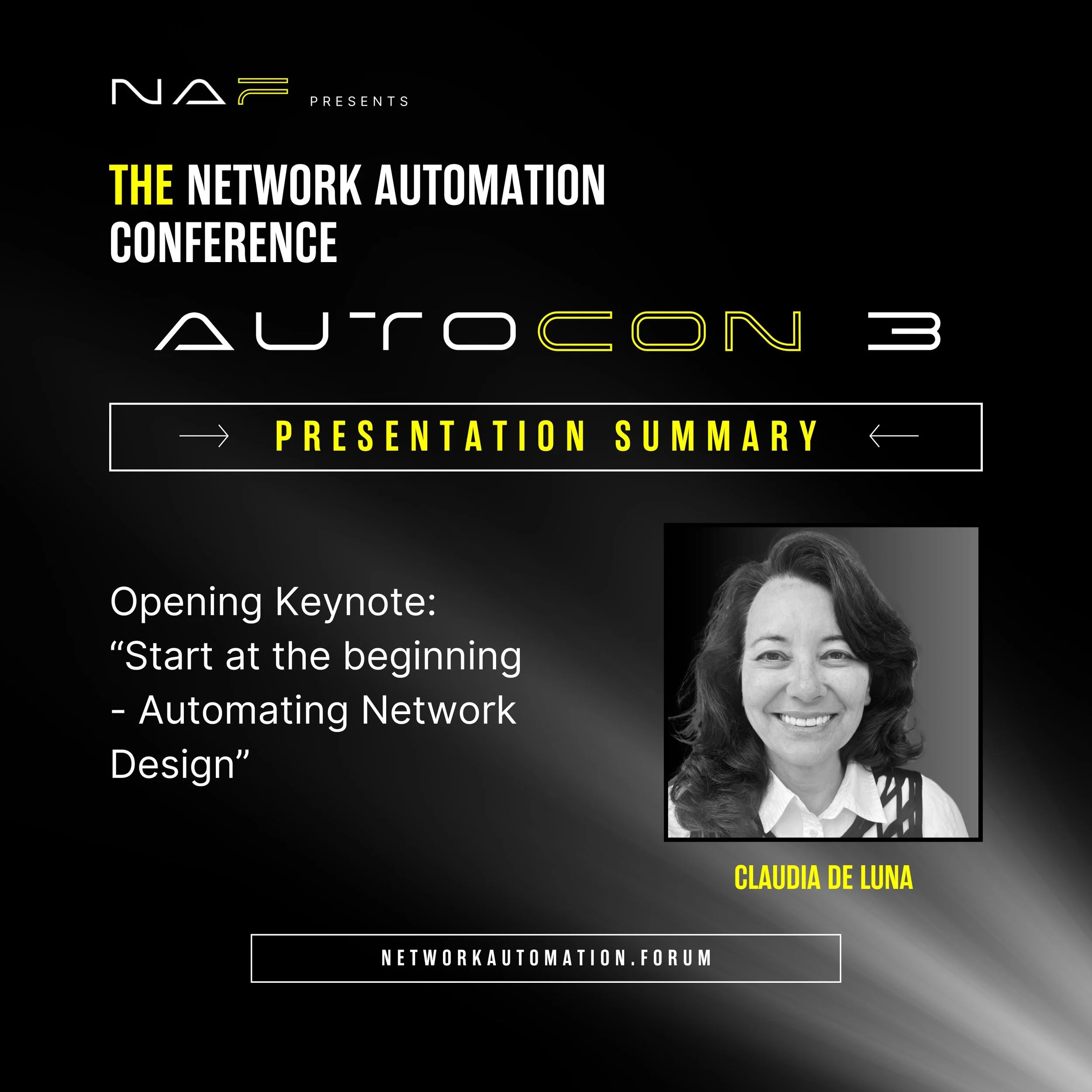
Start at the Beginning: Why Network Automation Needs Better Foundations
This keynote landed because it addressed the elephant in the room: despite years of progress, many network automation initiatives still feel fragmented and disconnected from clear business value. De Luna's message wasn't about specific tools or techniques—it was about stepping back, asking better questions, and building stronger foundations.
Beyond the Marketing: What Network Engineers Really Think About Vendor APIs
While the frustrations shared by the NAF community document a wide variety of very specific problems, they also represent an opportunity. Understanding these common failure patterns helps engineers build more resilient automation solutions and provides vendors with clear feedback about what needs improvement.
Developer Life Hacks: top tips from the naf Community
A distilled analysis of productivity tools and techniques shared in a recent NAF Slack thread where network automation developers discussed their favorite "dev tools & lifestyle hacks." Rather than presenting these as universal truths, this post captures the real dynamics of the conversation to help you evaluate what might work for your specific workflow.